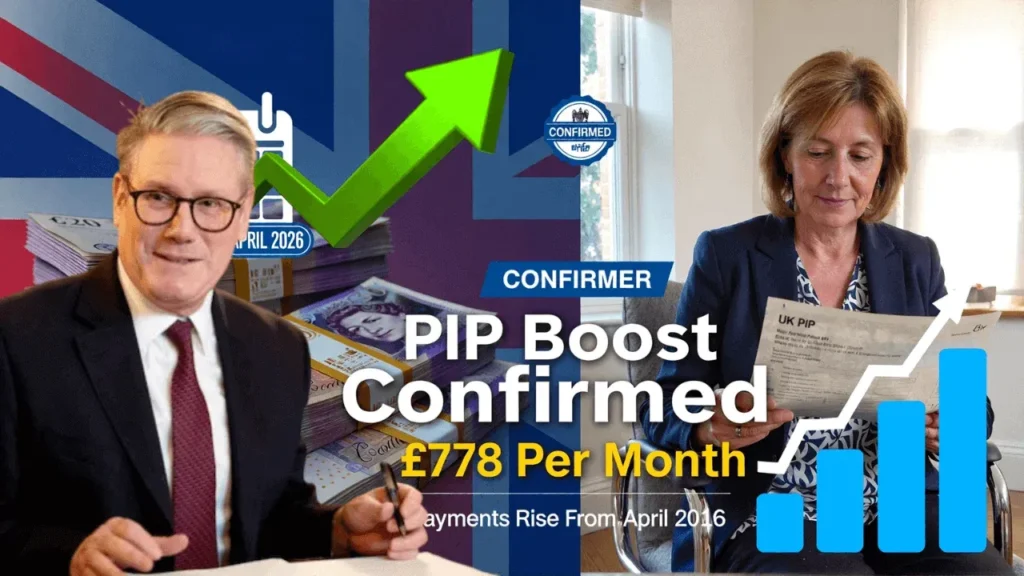
Personal Independence Payment (PIP) claimants across the UK are set to receive higher payments from April 2026, after confirmation that rates will be uprated with the highest possible monthly amount rising to £778. The change affects millions of disabled people who rely on PIP to help manage the extra costs linked to long-term health conditions and disabilities.
With living costs still placing pressure on household budgets, particularly for people facing disability-related expenses, the announcement provides clarity and reassurance. While PIP is not designed to replace income, it remains a vital source of financial support that helps people maintain independence and quality of life.
Why PIP Payments Are Increasing in April 2026
PIP rates are reviewed annually and are usually increased in line with inflation. This process is intended to prevent disability benefits from losing value as prices rise.
Although inflation has eased compared with recent years, evidence shows that disabled people often face higher-than-average living costs, including energy use, transport, care needs, and medical expenses. The April 2026 increase reflects continued recognition of these pressures.
What Personal Independence Payment Is and Who It Supports
PIP is a non-means-tested benefit for people aged 16 to State Pension age who have long-term physical or mental health conditions. It is not affected by earnings, savings, or employment status.
Eligibility is based on how a condition affects a person’s ability to carry out everyday activities and move around, rather than the diagnosis itself. This means people with a wide range of physical, sensory, cognitive, and mental health conditions may qualify.
How PIP Payments Are Structured
PIP is made up of two separate components:
- Daily Living Component
- Mobility Component
Each component can be awarded at either a standard rate or an enhanced rate, depending on how severely a condition affects the claimant.
Some people receive one component only, while others receive both.
How the £778 Per Month Maximum Is Calculated
The widely reported £778 per month figure represents the combined value of:
- Enhanced Daily Living Component
- Enhanced Mobility Component
Only claimants who qualify for both components at the highest level will receive the full £778 each month. Many people will receive less, depending on their individual award.
Daily Living Component Explained
The daily living component is designed to help with extra costs linked to everyday tasks, such as:
- Preparing and eating food
- Washing, bathing, and dressing
- Managing medication or treatments
- Communicating and reading
- Making budgeting decisions
People who need frequent help, supervision, or prompting with these activities may qualify for the enhanced rate.
Mobility Component Explained
The mobility component supports people who struggle with:
- Physically moving around
- Planning or following journeys
- Travelling safely and independently
This can include physical mobility difficulties as well as mental health or cognitive conditions that affect travel. Greater levels of difficulty result in higher payments.
Who Will Benefit From the April 2026 PIP Increase
All existing PIP claimants will see their payments increase from April 2026, provided they remain entitled to the benefit. New claimants awarded PIP after that date will also receive the higher rates.
The increase is applied automatically, with no need to make a new claim or request a reassessment.
When the New PIP Rates Will Be Paid
The updated rates take effect from April 2026. Because PIP is usually paid every four weeks, the exact date the higher amount appears will vary depending on individual payment schedules.
Most claimants will see the increase in their first payment after April.
Do Claimants Need to Do Anything?
No action is required to receive the higher rate. The uprating is processed automatically.
However, claimants should ensure that their bank details and contact information held by the Department for Work and Pensions are up to date to avoid payment delays.
PIP and Other Benefits
PIP is separate from benefits such as Universal Credit and Employment and Support Allowance. It:
- Is not reduced by earnings or savings
- Does not count as taxable income
- Can be claimed alongside Universal Credit
In some cases, receiving PIP can increase entitlement to other benefits through additional elements.
Mental Health and Fluctuating Conditions
Mental health conditions, including anxiety, depression, and cognitive impairments, can qualify for PIP if they have a substantial impact on daily living or mobility.
PIP assessments also take into account fluctuating conditions, focusing on how someone is affected on the majority of days rather than occasional good or bad periods.
Why Not Everyone Will Receive £778 Per Month
The £778 figure represents the maximum possible PIP award. Many claimants receive:
- Standard rates rather than enhanced rates
- Only one component instead of both
Actual payment amounts vary depending on individual circumstances and assessment outcomes.
Important Scam Warnings
Benefit uprating announcements often lead to scam attempts. Claimants should remember that no action or payment is required to receive the increase.
The DWP will never ask for bank details via text, email, or social media.
Key Points to Remember
- PIP payments rise from April 2026
- The highest possible rate will be £778 per month
- The increase is automatic
- No application or reassessment is required
Final Thoughts
The confirmed PIP increase in April 2026 provides important financial reassurance for disabled people across the UK. While it will not eliminate all cost-of-living pressures, the higher rates offer meaningful support for those facing the greatest challenges.
As the new financial year approaches, understanding how PIP works and what level of support applies to each individual award can help claimants plan ahead and manage their finances with greater confidence.

My name is Arsam, and I am the founder and author of Mymct. I created this website to share reliable mobile technology updates and important news in a simple and easy-to-understand way. I have a strong interest in smartphones, mobile apps, and the fast-changing digital world, and I enjoy researching topics that are useful for everyday users.