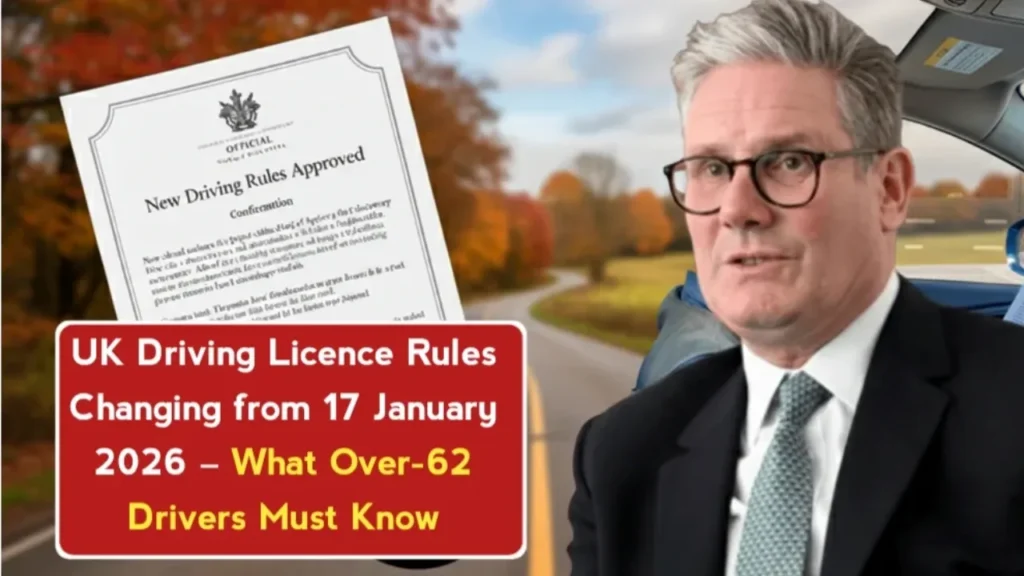
From 17 January 2026, the UK will introduce updated driving licence rules that place new emphasis on drivers aged over 62. These changes are being rolled out as part of a long-term road safety strategy, focusing on health awareness, licence accuracy, and responsible driving — not punishment or sudden restrictions.
If you are already over 62 or approaching this age, understanding the upcoming rules early will help you stay fully compliant, avoid unnecessary stress, and continue driving legally and confidently.
Why the UK Is Updating Driving Licence Rules for Older Drivers
The UK has a rapidly ageing population, and millions of people now continue driving well into their sixties, seventies, and beyond. Most older drivers are experienced and careful, but official safety reviews show that age-related health changes — such as eyesight decline, slower reaction times, or medical conditions — need clearer monitoring.
The 2026 update is designed to improve road safety while protecting the independence and mobility of older motorists. The goal is early awareness and responsibility, not licence removal.
Who Is Classified as an Over-62 Driver Under the New Rules
Under the updated framework, an over-62 driver refers to anyone who is 63 years old or above on or after 17 January 2026. This applies to holders of:
- Car driving licences
- Motorcycle licences
- Standard UK photocard licences
The rules apply across England, Scotland, Wales, and Northern Ireland. Turning 62 does not automatically trigger restrictions, but once in this age group, drivers may receive more frequent reminders and checks.
Changes to Driving Licence Renewal Expectations
Currently, UK drivers renew their photocard licence every 10 years, while drivers aged 70 and over must renew every three years with a self-declaration of medical fitness.
From January 2026, drivers over 62 will see a stronger focus on early licence accuracy checks. While the official three-year renewal still begins at 70, drivers with known medical conditions may be contacted earlier to confirm:
- Up-to-date personal details
- Current health status
- Ongoing fitness to drive
This approach aims to prevent last-minute issues later in life.
Medical Declarations: What Over-62 Drivers Must Report
One of the most important responsibilities under the new rules is medical self-reporting. Drivers over 62 are legally required to inform authorities if they develop conditions that could affect driving safety.
Common reportable conditions include:
- Vision or eyesight problems
- Diabetes treated with insulin
- Heart or cardiovascular conditions
- Neurological disorders
- Sleep-related conditions
In some cases, confirmation from a GP or specialist may be requested. Reporting a condition does not automatically mean losing your licence. Many drivers continue driving safely once conditions are properly managed.
Eyesight Standards Will Be More Strongly Emphasized
Eyesight requirements already apply to all UK drivers, but from 2026, over-62 drivers are expected to be more proactive. Regular eye tests and correct use of glasses or contact lenses are essential.
If corrective lenses are required to meet legal driving standards, they must always be worn while driving. Failing an eyesight check can result in:
- Licence suspension
- Fines or penalty points
- Insurance complications
Routine eye tests are one of the easiest ways to stay compliant.
How the New Rules May Affect Car Insurance
While licence rules are handled by authorities, insurance providers closely monitor regulatory changes. From 2026, insurers may ask more detailed questions about:
- Licence renewal status
- Medical declarations
- Recent changes to driving eligibility
Drivers who remain honest, organized, and compliant usually continue to access competitive insurance rates, especially if they maintain a clean driving record.
What Daily Driving Will Look Like After January 2026
For most over-62 drivers, daily driving will remain unchanged. There are:
- No new driving tests
- No blanket age-based bans
- No automatic restrictions
The biggest risks come from ignoring official letters, failing to report medical changes, or missing renewal deadlines. Staying organised ensures a smooth experience.
Support Available for Older Drivers
Alongside rule changes, more supportive resources are being promoted for older drivers. These include optional refresher courses, local assessments, and updated guidance on modern road systems.
These services are voluntary and designed to build confidence — not test or penalise drivers.
Advice for Families and Carers
Families often worry about older relatives driving. The updated rules encourage early, honest conversations about health, eyesight, and confidence behind the wheel.
Addressing concerns early helps avoid sudden decisions later and allows drivers to stay independent for longer.
How to Prepare Now for the 2026 Changes
Over-62 drivers can prepare by taking simple steps:
- Check when your driving licence expires
- Book regular eye tests
- Review medical conditions with your GP
- Keep contact details up to date
Being proactive reduces stress and ensures uninterrupted driving rights.
Final Thoughts
The UK driving licence changes from 17 January 2026 are about safety, responsibility, and long-term independence. For drivers over 62, the message is clear: stay informed, stay honest, and stay prepared.
With sensible planning and awareness, most older drivers will continue enjoying the freedom of the road safely for many years to come.

My name is Arsam, and I am the founder and author of Mymct. I created this website to share reliable mobile technology updates and important news in a simple and easy-to-understand way. I have a strong interest in smartphones, mobile apps, and the fast-changing digital world, and I enjoy researching topics that are useful for everyday users.